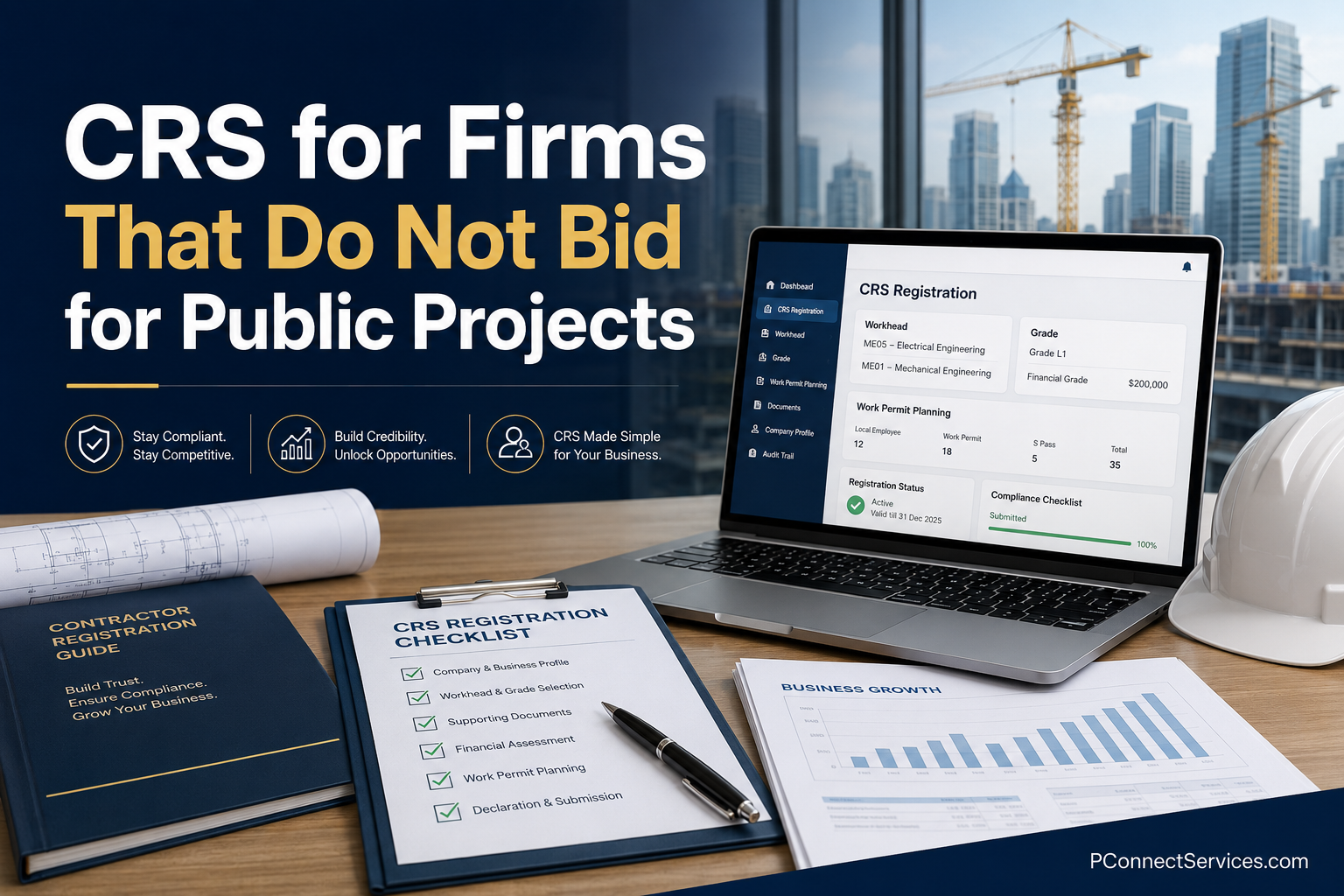

To register for CRS in Singapore, first choose the correct workhead, review the BCA CRS guidelines and workhead requirements, prepare your company, financial, personnel and track record documents, then submit the application through BCA’s eBACS portal and pay the processing fee.
Table of contents
If you’re running a construction business in Singapore, understanding how to register for contractors registration system is no longer optional—it’s essential.
The Contractors Registration System (CRS), administered by the Building and Construction Authority (BCA), is a nationwide registration system for construction firms. Today, it affects not just companies bidding for government jobs, but also firms hiring construction S Pass and/or Work Permit holders.
In simple terms:
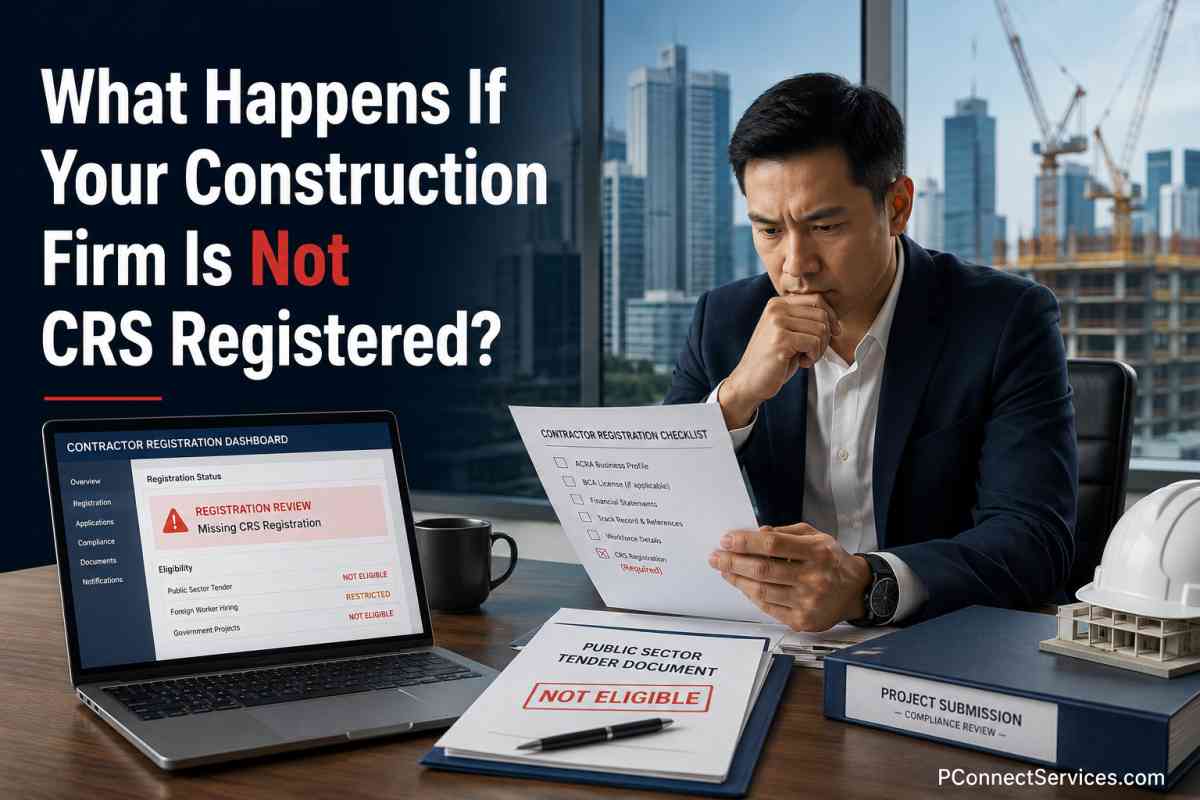
If your company wants to hire foreign construction workers or take on public sector construction projects, CRS registration is part of the process.
Let me walk you through it step by step—clearly and practically—so you know exactly what to do.
Quick Takeaways
-
The contractors registration system is required for hiring foreign construction workers and public tenders
-
Managed by the Building and Construction Authority (BCA)
-
Choosing the correct workhead is critical
-
Applications are submitted online via BCA
-
Proper documentation is the key to smooth approval
What Is the Contractors Registration System (CRS)?
The contractors registration system CRS is a framework by the building and construction authority that classifies construction companies based on their capabilities.
It serves two main purposes:
-
Determines eligibility for construction tenders (especially public sector)
-
Regulates firms hiring foreign construction workers, including S Pass and Work Permit holders
In short, the CRS is not just a formality—it’s a gatekeeping system for participation in Singapore’s construction industry.
Who Needs CRS Registration in Singapore?
This is where many businesses get confused.
You will need CRS registration if your company:
-
Wants to bid for public sector construction
-
Acts as a first-level subcontractor in public sector construction projects
-
Plans to hire construction S Pass and/or Work Permit holders
This means that even if you are doing private projects, you may still need the BCA contractors registration system if your workforce includes foreign construction workers.
How the CRS Registration System Works
Before jumping into the application process, it helps to understand how the registration scheme is structured.
CRS is divided into:
1. Registration Categories
The system includes different registration categories, such as:
-
Construction Workheads (CW)
-
Mechanical & Electrical (ME)
-
Trade Workheads (TR)
-
Construction-related (CR)
Each category represents a specific area of building works or services.
2. Workheads and Grade
Each company registers under one or more workheads, which define what type of construction projects you can take on.
You’ll also be assigned a grade, which determines:
-
The value of projects you can bid for
-
Your eligibility for certain tenders
Choosing the correct workhead is critical—it affects your entire business positioning.
Step-by-Step: How to Register for Contractors Registration System
Here’s a clear breakdown of the registration process.
Step 1: Identify the Right Workhead
Start by reviewing what your company actually does.
Ask yourself:
-
What type of construction services do we provide?
-
Are we a general contractor, specialist, or subcontractor?
This determines your workheads and entry requirements.
Selecting the wrong category is one of the most common mistakes companies make during contractor registration.
Step 2: Check CRS Entry Requirements
Each workhead has its own registration requirements, typically covering:
-
Paid-up capital
-
Relevant track record
-
Qualified personnel
-
Financial standing
For example, entry-level grades often require a minimum track record of completed projects and basic financial capability.
Step 3: Prepare Company Information and Documents
You’ll need to gather the following:
Company Documents
-
ACRA BizFile (latest)
-
Business profile and company information
Financial Documents
-
Latest management accounts
-
Audited accounts (for higher grade applications)
Personnel Documents
-
NRIC / Pass details (including S Pass and Work Permit)
-
CPF contributions for local employees
-
Qualifications and experience
Track Record Documents
-
Contracts and project details
-
Completed and ongoing construction projects
-
Supporting documents showing value and scope
This is where many applications slow down—missing or inconsistent documentation.
Step 4: Submit Application via BCA eBACS
All application submissions are done through BCA’s online portal.
During submission:
-
Upload all required documents
-
Select the correct workhead and grade
-
Ensure details are accurate
Once submitted, your application process officially begins.
Step 5: Pay the Processing Fee
There is a non-refundable fee for CRS applications.
Even if the application is unsuccessful, the fee still applies—so accuracy matters.
Step 6: Wait for Approval and Monitor Status
Most applications are processed within a few weeks.
You can check your:
-
Registration status
-
Approval outcome
-
Any requested clarifications
Once approved, your company will be listed under the BCA contractor registration directory.
What Documents Are Required for CRS Registration?
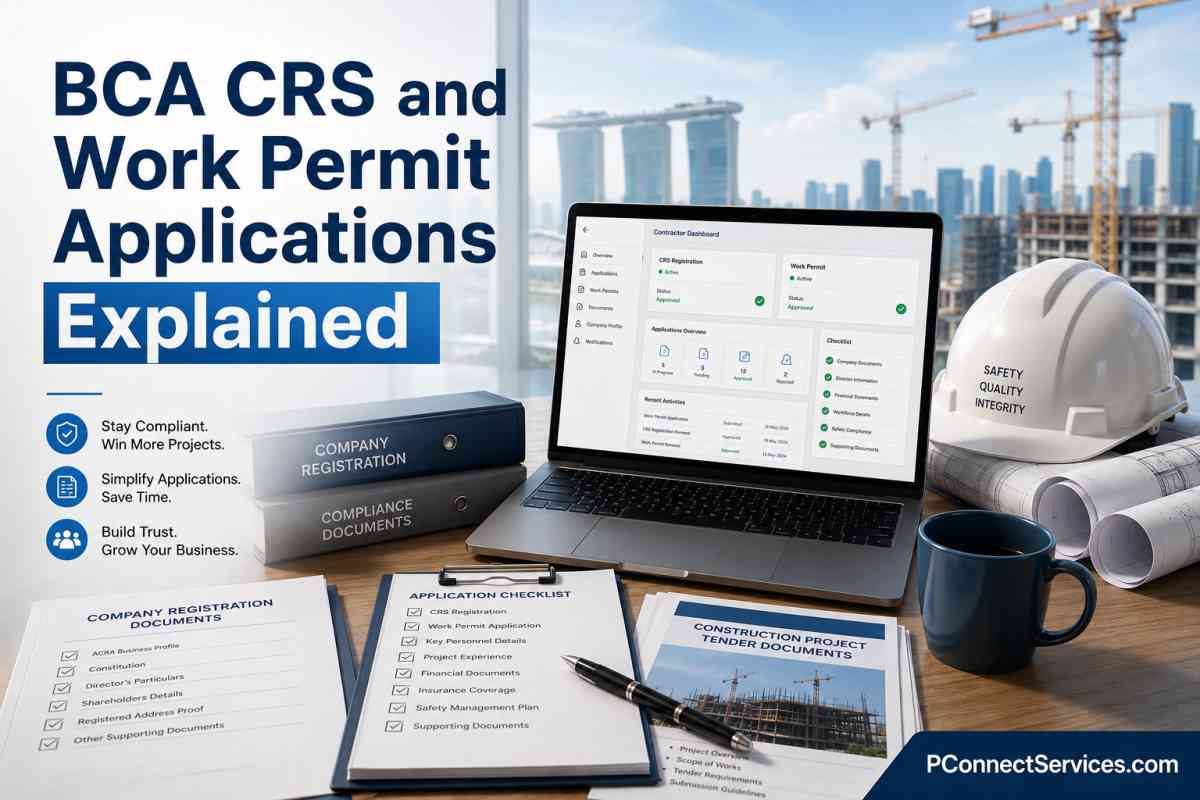
Here’s a quick checklist to simplify things:
-
Company BizFile and details
-
Financial statements (management accounts or audited account)
-
Personnel documents (including CPF and pass information)
-
Project track records
-
Supporting contracts and completion certificates
Think of this as your “CRS submission package.”
CRS vs Builder’s Licence: Do You Need Both?
A common question we get is:
“Is CRS enough?”
The answer: not always.
The CRS is a registration system, while a builder’s licence is required for certain types of building works under Singapore law.
Depending on your workhead and scope of work, your company may need both.
Common CRS Application Mistakes to Avoid
Here are some of the most frequent issues we see:
-
Choosing the wrong workhead
-
Submitting incomplete track record documents
-
Outdated financial statements
-
Missing CPF or personnel details
-
Misunderstanding entry requirements
-
Assuming CRS is only for government projects
Avoiding these mistakes can save weeks of delays.
How Long Does CRS Registration Last?
CRS registration typically runs on a 3-year cycle.
After that, companies must renew and show:
-
Updated track records
-
Financial stability
-
Continued compliance
Why CRS Matters More Than Ever
With the expansion of CRS requirements, the system now plays a bigger role across the entire built environment sector.
Today, CRS is not just about:
-
Government tenders
It’s also about:
-
Hiring construction workers
-
Compliance with and the construction authority BCA
-
Long-term business growth in Singapore’s construction industry
In other words, CRS is becoming a core part of how construction firms operate—not just a one-time registration.
Final Thoughts: Getting CRS Registration Right
If you’re planning to grow your construction business in Singapore, getting your CRS registration right from the start makes a big difference.
The process itself is manageable—but the details matter:
-
Correct workhead
-
Complete documents
-
Clear understanding of requirements
Need Help with CRS Registration?
If you’re unsure about:
-
Which workhead to apply for
-
Whether your company meets the entry requirements
-
How to prepare your documents properly
P Connect Services can guide you through the entire process—from planning to submission—so you can move forward with clarity and confidence.
FAQs
You need CRS registration if your company:
- Wants to tender for public sector construction projects
- Acts as a first-level subcontractor for public sector work
- Plans to hire construction S Pass and/or Work Permit holders
Even private sector contractors may need CRS if they employ foreign construction workers.
To register for CRS:
- Choose the correct workhead based on your services
- Review BCA registration requirements
- Prepare company, financial, personnel, and track record documents
- Submit your application through the BCA eBACS portal
- Pay the processing fee and wait for approval
You typically need:
- ACRA BizFile (company profile)
- Financial statements (management accounts or audited accounts)
- Personnel details (including CPF and pass information)
- Project track records (completed and ongoing projects)
- Supporting contracts and completion documents
Having complete and accurate documents is key to faster approval.
Your workhead should reflect the actual type of construction work your company performs. For example:
- General building contractors
- Civil engineering firms
- M&E specialists
Choosing the wrong workhead can delay your application or limit your business opportunities.
Common issues include:
- Choosing the wrong workhead
- Incomplete track record documents
- Outdated financial statements
- Missing personnel or CPF details
- Not meeting entry requirements
Careful preparation can prevent most delays.
References
1. Building and Construction Authority. (29 March 2026). Frequently asked questions on Contractors Registration System (CRS). View Source (Retrieved on 6 Apr 2026)
2. Building and Construction Authority. BCA directory. View Source (Retrieved on 6 Apr 2026)
3. Building and Construction Authority. Builders Licensing Scheme (BLS). View Source (Retrieved on 6 Apr 2026)
4. Building and Construction Authority. Contractors Registration System (CRS). View Source (Retrieved on 6 Apr 2026)
5. Building and Construction Authority. eBACS. View Source (Retrieved on 6 Apr 2026)
6. Building and Construction Authority. Facilities Management (FM) Registry. View Source (Retrieved on 6 Apr 2026)
7. Building and Construction Authority. Procurement. View Source (Retrieved on 6 Apr 2026)
8. Ministry of Manpower. (2025). Work passes. View Source (Retrieved on 6 Apr 2026)