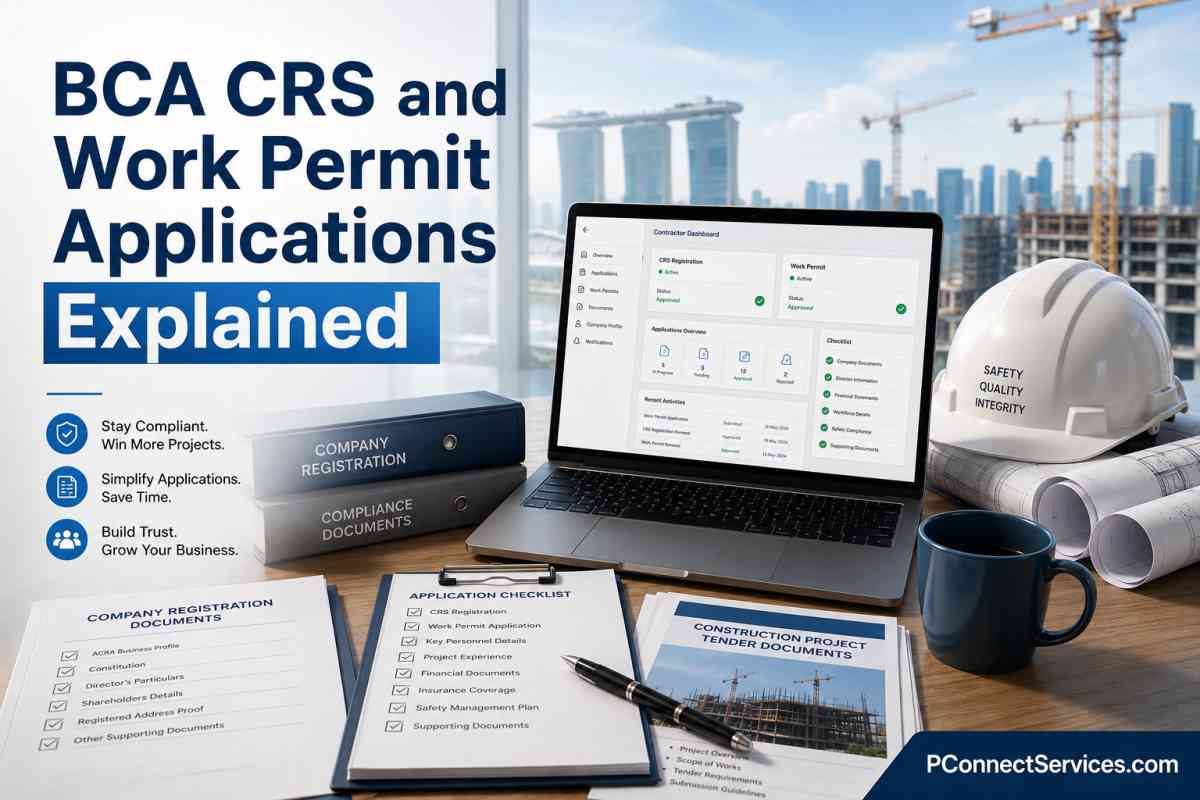

If you’re planning to hire foreign construction workers in Singapore, there’s one step many companies still overlook — and it can quietly delay your entire manpower plan.
Table of contents
The Contractors Registration System (CRS).
A common question we hear from employers is:
“Do I really need CRS if I’m not bidding for government projects?”
Short answer: Yes — in most cases today, you do.
Let’s walk through this clearly so you know exactly what to do next.
Quick Takeaways
-
The contractors registration system (CRS) is now part of the hiring process for many construction firms
-
All firms hiring foreign construction workers need to review CRS requirements carefully
-
CRS is managed by the Building and Construction Authority (BCA)
-
It applies beyond construction tenders, including private construction projects
-
CRS works alongside the Ministry of Manpower (MOM) to enforce the rules for work permit holders
What Is the Contractors Registration System (CRS)?
The contractors registration system, also known as CRS, is a national registry managed by the Building and Construction Authority.
It serves as a registry of construction firms in Singapore and helps ensure that companies operating in the construction sector meet basic industry standards, including financial strength, experience, and capability.
In simple terms:
The CRS tells regulators, clients, and partners that your company is properly set up to carry out construction projects.
Why CRS Matters for Hiring Foreign Construction Workers
Let’s address the key issue directly.
1. CRS Is Now Part of Hiring Readiness
Today, why CRS matters for hiring foreign construction workers comes down to one thing:
It is no longer just about tenders — it is about whether your firm is ready to hire.
Many employers assume they can start applying for work permits first and sort out CRS later. In practice, this often leads to delays.
If your firm’s hiring of foreign construction workers is not aligned with CRS requirements, your hiring process may slow down before it even begins.
2. It Applies Even If You Only Do Private Projects
A common misunderstanding:
“CRS is only for public sector construction.”
That used to be closer to the truth. But today, firms hiring foreign construction labour must consider CRS, even if they handle only private jobs.
So whether your construction firm is working on:
-
Renovation projects
-
Subcontract work
-
Private developments
CRS may still apply.
3. It Signals Compliance and Credibility
When you are hiring foreign workers, especially migrant workers in the construction industry, regulators want to ensure:
-
Your business is legitimate
-
Your operations are structured
-
Your projects are properly managed
CRS helps demonstrate compliance with these expectations.
It also shows that your company meets:
-
Basic registration requirements
-
Relevant eligibility criteria
-
Acceptable track record standards
CRS and Work Permit Hiring: How They Are Connected
CRS does not replace Ministry of Manpower (MOM) rules — it complements them.
The Ministry of Manpower governs work permit requirements for foreign construction workers.
This includes:
-
Work permit holders must meet skill classifications
-
Quota and levy rules
-
Approved source countries
-
Safety and certification standards
Example: Construction Sector Rules
In the construction sector, employers must:
-
Maintain a ratio of local employees to foreign workers
-
Ensure a percentage of workers is higher-skilled
-
Follow strict work permit requirements
So in practice:
CRS prepares your company structurally, while MOM rules govern the worker-level eligibility.
Both are needed to meet full compliance.
CRS vs BLS: Don’t Confuse the Two
Another common confusion is between:
-
The CRS (Contractors Registration System)
They are not the same.
-
CRS → focuses on your company’s registration within the construction industry
-
BLS → applies to licensing under building control laws
Some construction firms may need both, depending on the nature of their construction projects.
What CRS Looks At (Entry Requirements)
When applying for CRS, your company is assessed based on several factors.
1. Financial Strength
This includes:
-
Paid-up capital
-
In some cases, minimum paid-up capital thresholds
These ensure your firm can support operations and manpower.
2. Experience and Track Record
CRS looks at:
-
Your project track record
-
Projects completed over the past three years
-
Your firm’s involvement in the construction sector
This helps verify your capability.
3. Company Structure
Your company must:
-
Be properly registered in Singapore
-
Align with the appropriate workhead classification
-
Demonstrate operational readiness
What Happens If You Skip CRS?
Let’s keep this practical.
If you try hiring foreign construction workers without understanding CRS:
-
Your hiring timeline may be delayed
-
Your internal planning may break down
-
You may need to restart parts of the application process
-
You may struggle to expand into construction tenders later
It is not about penalties first — it is about inefficiency and missed opportunities.
When Should You Register for CRS?
The safest approach:
Register for CRS before you start hiring foreign workers.
This is especially important if your company is:
-
Expanding operations
-
Moving from local to foreign manpower
-
Planning growth in the construction industry
-
Taking on larger or more complex projects
CRS and Business Growth: More Than Compliance
CRS is not just about ticking a regulatory box.
It also supports:
1. Expansion Opportunities
If your firm plans to grow into:
-
Larger projects
-
Government tenders
-
First-tier subcontracting
CRS becomes essential.
2. Stronger Industry Positioning
Being part of the contractors registration system signals that your firm:
-
Meets recognised industry standards
-
Is structured for long-term operations
-
Is ready for more complex work
3. Better Hiring Confidence
When your CRS is properly set up, you can move faster when:
-
Applying for work permits
-
Planning manpower
-
Scaling your workforce
Step-by-Step: How CRS Fits Into Hiring
Here’s a simplified flow you can follow:
-
Confirm your business scope and construction activities
-
Review CRS eligibility criteria and workhead classification
-
Prepare documents (financials, track record, company details)
-
Submit your CRS application
-
Align with the MOM work permit requirements
-
Proceed with hiring foreign workers
This sequence helps reduce friction.
Best Practices for Employers
If you are a firm hiring foreign construction workers in Singapore, here are practical tips:
-
Start CRS early — don’t wait until manpower is urgent
-
Understand both BCA and MOM requirements
-
Ensure your paid-up capital meets expectations
-
Maintain proper documentation of projects
-
Plan hiring alongside compliance, not after
Who Should Get Help With CRS?
You may benefit from guidance if:
-
You are a new contractor
-
You are hiring foreign workers for the first time
-
Your firm is growing quickly
-
You are unsure which CRS category applies
-
You want to avoid delays in your hiring timeline
Final Thoughts
So, why CRS matters for hiring foreign construction workers comes down to this:
CRS is no longer just about tenders — it is part of the foundation for hiring properly in Singapore’s construction sector.
If your goal is to build a reliable workforce of foreign construction workers, CRS helps ensure your company is ready — structurally, financially, and operationally.
Need Help Navigating CRS and Hiring?
At P Connect Services, we help employers:
-
Understand CRS requirements for their business
-
Prepare documents for the application process
-
Align CRS with MOM work permit planning
-
Reduce confusion when hiring foreign workers
If you are unsure where to start, it’s always better to clarify early than to fix delays later.